Abstract Seamless Geometric Patterns for Scalable Vector Design
Core Characteristics of Abstract Seamless Geometric Patterns
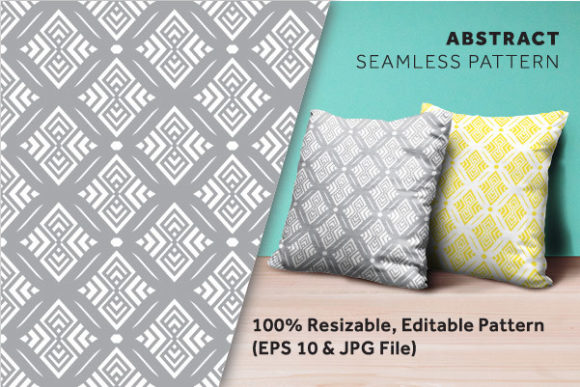
Abstract seamless geometric patterns represent a sophisticated intersection of mathematical precision and creative expression. These designs typically repeat infinitely without visible seams or disruptions, making them ideal for continuous surface applications. The abstract nature allows for a wide range of visual interpretations, from subtle textures to bold, dynamic motifs. Each pattern is built from geometric elements such as lines, polygons, curves, and grids, arranged in repeating units that tile across a plane. The seamless quality ensures that when applied to backgrounds, wallpapers, or fabrics, the pattern flows uniformly without awkward breaks or misalignments. This characteristic is crucial for professional design work where consistency is paramount. Additionally, the abstract aspect means these patterns are not tethered to representational imagery, offering greater versatility across different contexts and styles.
When working with abstract seamless geometric patterns, designers appreciate the ability to create complex visuals that remain coherent at any scale. Unlike raster images, which pixelate when enlarged, vector-based abstract patterns retain sharp edges and precise geometry. This scalability stems from the mathematical definition of vector graphics, where each shape is defined by coordinates and curves rather than a fixed grid of pixels. As a result, a small tile can be expanded to cover a billboard or reduced for a business card without loss of quality. The Abstract seamless geometric patterns background option is particularly valuable for web interfaces, packaging, and branding, where a unified look must adapt to various screen sizes and print dimensions.
Practical Applications Across Creative Fields
The utility of abstract seamless geometric patterns extends far beyond simple decoration. In graphic design, these patterns serve as foundational elements for brand identities, providing a distinctive visual language that can be applied consistently across all marketing materials. For instance, a technology company might use a network of interlocking hexagons to convey connectivity and innovation, while a fashion brand could employ flowing, organic curves to suggest elegance and movement. The seamless nature ensures that the pattern can cover business cards, letterheads, websites, and product packaging without visual hiccups, reinforcing brand recognition.
In interior design and architecture, abstract patterns are increasingly used for wallpapers, floor tiles, and textile applications. An abstract geometric pattern can transform a plain wall into a focal point, adding depth and texture without overwhelming the space. Designers often choose patterns that complement the architectural lines of a room, creating a cohesive aesthetic. For example, a repeating chevron pattern might echo the angles of a modern staircase, while a circular motif can soften the harsh lines of a minimalist office. Because these patterns are vector-based, they can be scaled to fit any surface, whether it’s a small accent wall or an expansive lobby floor.
Digital product designers rely on abstract seamless geometric patterns for user interface backgrounds, app illustrations, and social media graphics. A subtle pattern can add visual interest to an otherwise flat screen, improving the user experience without distracting from content. SaaS platforms often use abstract geometric backgrounds to differentiate dashboard sections or to create a modern, tech-forward look. The high quality vector illustration ensures that these patterns render crisply on retina displays and projectors alike, maintaining professional standards across devices.
Packaging design is another area where these patterns shine. A product’s packaging must attract attention on a crowded shelf, and an abstract geometric pattern can provide a unique, memorable wrapper. Food packages, cosmetic boxes, and retail bags frequently incorporate seamless patterns to suggest premium quality or organic origins. Because the pattern repeats flawlessly, it can wrap around cylindrical bottles or rectangular boxes without distortion, creating an uninterrupted visual flow.
Advantages for Professionals and Hobbyists
One of the primary benefits of using pre-designed abstract seamless geometric patterns is the time saved in creation. Instead of building a pattern from scratch, designers can license or download a high-quality vector set and adapt it to their specific needs. This is especially useful for freelance designers and small studios with tight deadlines. The patterns come with separate layers for different elements, allowing for easy customization. For example, a pattern might have a background layer, a primary motif layer, and an accent detail layer. Designers can adjust colors, resize components, or hide layers to create variations without starting over.
The scalability mentioned earlier is a massive advantage for businesses that require consistent branding across multiple mediums. A pattern used on a website can be scaled down for a mobile app icon or scaled up for a trade show banner without any loss in quality. This consistency reinforces brand identity and ensures that the visual message remains clear regardless of format. Moreover, the included formats—specifically the 1 editable EPS 10 and 3 JPG previews—provide flexibility: the EPS file allows for full editing in vector software such as Adobe Illustrator, while the JPGs offer quick placement in simpler tools like Canva or Microsoft PowerPoint.
For hobbyists and educators, abstract seamless geometric patterns offer a accessible entry point to design. Teachers can use these patterns to demonstrate principles of symmetry, repetition, and color theory. Students can manipulate the layers to understand how geometric shapes combine to form complex designs. The ease of scaling means that patterns can be printed at any size for crafts, posters, or learning materials. Hobbyists working on personal projects—such as scrapbooking, digital art, or custom merchandise—can instantly elevate their work with professional-grade textures and backgrounds.
Technical Specifications and Workflow Integration
Understanding the technical aspects of these patterns helps in selecting the right file for each project. The included EPS 10 file is a vector format that can be opened in most professional illustration programs. EPS 10 is compatible with Adobe Illustrator CS6 and later versions, as well as CorelDRAW and Inkscape. This editable vector file contains all the pattern elements on separated layers, meaning each geometric shape or color block can be independently modified. Designers can change the palette to match a brand guideline, adjust the density of the pattern, or combine multiple patterns for a hybrid design.
The three JPG previews serve different purposes. Typically, one JPG shows the pattern at a standard resolution, another at a high resolution for print proofing, and a third might be a thumbnail for quick previewing. These raster previews are useful for clients who want to see how the pattern looks without opening vector software. They can also be used directly in web mockups or presentations. However, for final production—especially in print—the EPS vector file is recommended because it ensures that the pattern scales to any size without resolution loss. The high quality vector illustration nature of the EPS means that even at extreme enlargements, the lines remain crisp and the colors sharp.
When integrating an abstract seamless geometric pattern into a project, workflow considerations matter. For a website background, designers might export the pattern as an SVG from the EPS file to take advantage of scalable vector graphics on the web. For print, the EPS can be placed directly into layout software such as InDesign or QuarkXPress. The separate layers make it easy to create alternative versions, such as a light and dark variant, without starting from scratch. Remember that the mockup is not included in this instant download, so the pattern itself is the focus. This allows users to apply the pattern to their own mockups or final products, maintaining authenticity and control.
Considerations for Effective Implementation
While abstract seamless geometric patterns offer immense creative potential, certain considerations ensure successful implementation. First, the scale of the pattern relative to the surface must be evaluated. A pattern that looks dynamic on a small swatch can become overwhelming or too dense when enlarged on a large wall. Conversely, a pattern that appears subtle on a postcard might lose impact on a billboard. Designers should test the pattern at the intended size using the vector file, adjusting the scale of the geometry as needed. The separated layers facilitate this adjustment: the entire pattern group can be scaled proportionally, or individual elements can be resized independently.
Color management is another critical factor. Since abstract patterns rely heavily on geometric shapes, the colors chosen influence contrast and readability. High-contrast combinations, such as black and white or complementary colors, create bold statements. Low-contrast, analogous palettes produce subtle textures. When using the abstract seamless geometric patterns in print, ensure that the EPS file uses CMYK color mode if required by the printer. Many vector files default to RGB, but conversion can shift colors unexpectedly. The editable EPS allows for color mode changes without degrading quality. Additionally, test the pattern on the intended substrate or screen to ensure color accuracy.
The seamless nature of these patterns depends on precise tiling. In vector software, the tile is usually defined by a bounding box that repeats perfectly. When modifying the pattern, avoid shifting elements outside this tile boundary, or adjust the bounding box accordingly. Most high-quality downloads include a clearly defined tile boundary on a separate layer. For digital use, check that the pattern tiles seamlessly on the web (e.g., via CSS background-repeat). The JPG previews are perfect for quick visual checks, but the vector source provides the accuracy needed for production.
For business owners using these patterns in marketing materials, consistency across different media is key. A pattern used on a brochure should match the one on a website, both in color and structure. The included editable EPS ensures that the same source file is used for all outputs, maintaining uniformity. If multiple patterns are combined in a single project, ensure they share a similar geometric language—for example, all patterns based on hexagon grids or all using curved lines—to avoid visual chaos. The abstract nature allows for mixing, but a coherent theme enhances professionalism.
Observing Trends and Future Directions
Current design trends show a growing preference for abstract geometric patterns in both digital and physical spaces. Minimalist and modern aesthetics often incorporate simple geometric repeats with negative space, appealing to clean and sophisticated tastes. On the other hand, maximalist trends use dense, complex patterns with vibrant colors to create energy and depth. The flexibility of vector illustrations enables designers to pivot between these styles quickly. With the rise of AR/VR and interactive environments, seamless patterns are finding new applications in virtual backgrounds, game textures, and live event visuals. The ability to scale to any size without loss of resolution becomes even more critical in these contexts where screens and projections vary widely.
Educators are increasingly integrating abstract geometric pattern design into curricula, using tools like Adobe Illustrator to teach math and art concepts. Students learn about tessellation, symmetry groups, and algorithmic design by manipulating vector patterns. The separated layers in these downloads serve as excellent teaching aids, allowing students to deconstruct and rebuild patterns. Researchers in fields such as psychology and marketing also study the impact of geometric patterns on perception and behavior, noting that certain patterns evoke feelings of stability, movement, or chaos. This academic interest further validates the value of high-quality vector resources.
As the demand for unique visuals grows, the market for ready-to-use vector pattern sets continues to expand. Professionals seek out patterns that save time without sacrificing originality. Abstract seamless geometric patterns fulfill this need by offering limitless stylistic possibilities, from retro motifs to futuristic grids. By understanding the characteristics, applications, and technical details outlined here, users can harness these patterns effectively in their own projects, whether they are designing a brand identity, decorating a space, or teaching a class. The instant download with included formats—1 editable EPS 10 and 3 JPG previews—provides everything needed to get started immediately, with the promise of high-quality, scalable results.