Seamless Patterns with Multi-Colored Christmas Lights for Garlands: A Practical Guide to Design, Use, and Alternatives
When designing festive textiles, wrapping paper, or digital graphics, the choice of pattern can define the entire mood of a project. Among the many options available, a set of seamless patterns with multi colored Christmas lights for garlands stands out for its versatility and seasonal appeal. These vector-based designs allow you to repeat a motif endlessly without visible seams, making them ideal for fabric printing, wallpaper, and surface decoration. But how do they compare with other festive pattern styles, and what should you consider before choosing one for your work?
This article explores what makes a set of seamless patterns with multi colored Christmas lights distinct, how it stacks up against alternative festive pattern approaches, and where it fits best in real-world projects. Whether you are a textile designer, a small business owner creating holiday merchandise, or a DIY enthusiast planning custom decorations, understanding the strengths and tradeoffs of these patterns will help you make a more informed decision.
What Defines a Set of Seamless Patterns with Multi Colored Christmas Lights?
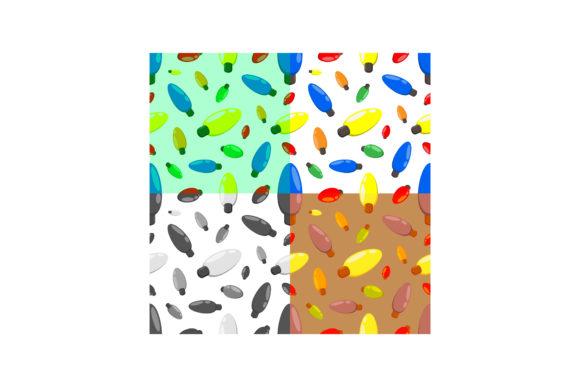
A set of seamless patterns with multi colored Christmas lights typically includes several coordinated designs built around the same theme: strings or garlands of festive lights in a range of colors. The patterns are created as vector files, which means they scale infinitely without losing quality—essential for everything from a small gift tag to a large fabric bolt. The seamless quality ensures that when the pattern tiles, there are no visible breaks or mismatches, giving a professional, polished finish.
What makes these patterns distinct is the combination of repetition and variety. While the lights themselves follow a consistent style—often with rounded bulbs, curved wires, and festive color palettes—each pattern in the set may arrange them differently. Some might feature dense clusters of lights, while others use spaced-out strings or diagonal cascades. The multi-colored aspect is central: rather than relying on a single hue, these patterns incorporate reds, greens, blues, yellows, and sometimes gold or silver, creating a lively, celebratory look.
Compared to a single static illustration or a non-repeating design, a seamless pattern offers efficiency. You can fill any surface area with the motif without additional layout work. This makes a set of seamless patterns with multi colored Christmas lights particularly valuable for production runs where consistency and speed matter.
How These Patterns Compare with Other Festive Design Options
When planning a holiday-themed project, you have several pattern categories to choose from. Understanding how a set of seamless patterns with multi colored Christmas lights differs from these alternatives helps you match the right tool to the job.
Versus Monochromatic or Single-Color Holiday Patterns
A single-color pattern—such as all-gold lights on a white background—offers elegance and restraint. It suits minimalist branding or upscale packaging. However, it lacks the playful energy that multi-colored designs bring. If your audience includes families, children, or anyone seeking a traditional festive feel, the multi-colored approach tends to resonate more strongly. The tradeoff is that multi-colored patterns can feel busier, so they work best when the overall composition is balanced with negative space or neutral backgrounds.
Versus Themed Icon Patterns (Snowflakes, Stars, Trees)
Patterns built around snowflakes or Christmas trees are iconic but can feel generic. A set of seamless patterns with multi colored Christmas lights offers a more specific, evocative motif. Lights are inherently associated with celebration, warmth, and decoration. They also lend themselves well to organic, flowing arrangements—unlike rigid geometric icons. On the downside, light patterns may be less versatile for non-Christmas winter projects, whereas snowflake patterns can sometimes stretch into a broader winter theme.
Versus Custom Illustrated Scenes
A custom illustrated scene—like a full village or a detailed tree—tells a story but is difficult to repeat seamlessly. It is also time-intensive and expensive to produce. A seamless pattern set, being vector-based and repeatable, is far more efficient for surface design. However, it sacrifices narrative depth. If your goal is to create a single hero image for a product, a scene might work better. For all-over print on fabric or wrapping paper, a seamless pattern is the practical choice.
Strengths of Using a Seamless Pattern Set for Garlands and Lights
Several practical advantages make a set of seamless patterns with multi colored Christmas lights a strong candidate for many projects.
- Scalability without quality loss: Because the patterns are vector files, you can resize them from a small smartphone case to a large banner without pixelation or blurring. This is especially important if you plan to use the same pattern across multiple product sizes.
- Time savings: Creating a seamless pattern from scratch requires careful alignment, testing, and adjustments. A pre-made set eliminates this labor, letting you focus on composition, color matching, and product application.
- Coordinated variety: Most sets include multiple pattern variations—dense, sparse, horizontal, diagonal, or scattered. This gives you design flexibility without needing to source separate assets. You can use one pattern for the main fabric and another for trim or accents.
- Print-ready for fabric: Vector seamless patterns are industry-standard for textile printing. They handle repeat sizing, color separation, and scaling required by digital or screen printing processes.
- Consistent aesthetic: All patterns in the set share a unified style, so your product line feels cohesive. This is valuable for branding or for creating a collection where every item visually belongs together.
Tradeoffs and Limitations to Consider
No design resource is perfect for every situation. Being aware of the limitations of a set of seamless patterns with multi colored Christmas lights helps you avoid mismatches.
- Less uniqueness: Because these are pre-made designs, the same pattern may appear on other products. If exclusivity is critical for your brand, you may want to commission a custom pattern or heavily modify the set. Some vendors offer extended licenses for limited runs, but absolute uniqueness is rare.
- Color palette constraints: While multi-colored, the specific hues in the set may not perfectly align with your brand colors or the exact shade you envision. Vector files are editable, but adjusting colors across multiple patterns takes time and skill. Ensure the base palette is close to your needs before purchasing.
- Potential visual density: Multi-colored light patterns can become overwhelming if used on large surfaces without breaks. Pairing them with solid-color panels, borders, or neutral backgrounds is often necessary to maintain visual comfort.
- Seasonal specificity: These patterns are strongly tied to Christmas and winter holidays. Using them outside that context may feel odd to audiences. If you need year-round patterns, this set is not a fit.
When a Set of Seamless Patterns with Multi Colored Christmas Lights Is the Right Choice
This type of pattern set shines in specific use cases. Here are scenarios where it is likely the best option.
- Holiday fabric collections: If you are designing cotton, linen, or polyester fabrics for festive apparel, quilting, or home décor, these patterns provide the repeatability and cheerfulness that holiday lines require. The multi-colored lights read immediately as festive without needing additional context.
- Wrapping paper and gift bags: Seamless patterns are ideal for continuous surface coverage. A set of seamless patterns with multi colored Christmas lights gives you several coordinated papers that look professional and reduce design time.
- Digital backgrounds for holiday marketing: Websites, social media graphics, and email headers benefit from subtle or bold pattern backgrounds. Vector seamless patterns load cleanly and scale across devices.
- Small-run merchandise: For craft fairs, Etsy shops, or pop-up markets, using a pre-made pattern set keeps costs low while still offering appealing, on-trend designs. You can produce mugs, tote bags, ornaments, and scarves with a consistent look.
- Educational or community projects: If you are teaching design or running a workshop, these patterns make excellent examples of seamless tiling, color theory, and vector editing. Their cheerful subject matter keeps learners engaged.
When You Might Need a Different Option
There are also situations where a set of seamless patterns with multi colored Christmas lights may not be the best fit.
- Ultra-luxury or minimalist branding: High-end holiday lines often rely on subtle textures, metallics, or single-color motifs. Multi-colored lights can feel too casual or playful for premium positioning. Consider a more restrained pattern or a custom design.
- Themed projects beyond Christmas: If your project covers winter solstice, New Year's Eve, or a generic winter theme, light patterns may still work, but snowflakes, stars, or abstract geometrics could be more inclusive. Ice-skating motifs or winter landscapes might better serve a broader audience.
- Large-scale wall murals or immersive environments: For a wall-sized installation, a seamless pattern can feel repetitive. A custom illustrated scene or a non-repeating design might create a stronger visual impact. Patterns are best for surface coverage, not storytelling at scale.
- Products requiring extreme color accuracy: If you are printing on fabrics that use specific Pantone colors for corporate branding, adjusting a pre-made pattern set to match exactly can be tedious. A custom pattern built from your color palette from the start is often more reliable.
Practical Factors to Evaluate Before Choosing a Pattern Set
To decide whether a set of seamless patterns with multi colored Christmas lights is right for your project, consider these decision factors.
- File format and editing flexibility: Look for vector formats such as AI, EPS, or SVG. These allow you to change colors, rotate elements, adjust scale, and combine patterns. Raster formats like JPEG or PNG are less useful for professional fabric printing.
- Number and variety of patterns: A set with 6–12 patterns offers enough range to create a coordinated collection. Fewer than four may limit your options. Check that the patterns include both dense and sparse arrangements so you can use them across different product types.
- Licensing terms: Read the license carefully. Some sets allow unlimited commercial use; others restrict the number of products or require attribution. If you plan to sell items in large quantities, ensure the license covers your intended use.
- Resolution and seam quality: Even vector patterns can have poorly aligned seams. Look for sets that are tested and proven seamless. Sample the pattern at different scales before committing.
- Style consistency with your brand: Multi-colored does not have to mean chaotic. Some sets use muted tones or pastel lights, while others are bright and saturated. Choose a palette that complements your existing brand or product line.
Realistic Examples of Use
Imagine you run a small home textiles brand. For the holiday season, you want to produce a line of cotton napkins, a table runner, and oven mitts. Using a set of seamless patterns with multi colored Christmas lights, you select a dense pattern for the runner and a lighter, spaced pattern for the napkins. The mitts use a diagonal variation. Because all patterns come from the same set, the colors and style are consistent across the line. You print them on natural linen, and the result feels festive but not overwhelming. Production time is reduced because you did not need to design each pattern from scratch.
Alternatively, suppose you are designing a holiday website background. You want something that suggests celebration without distracting from product photos. A muted version of a light garland pattern, scaled down and placed behind a semi-transparent overlay, provides texture and atmosphere. The vector format ensures it looks crisp on retina displays. In this case, the pattern is a supporting element, not the main focus, which is exactly what a seamless pattern does well.
On the other hand, if you are creating a luxury Christmas album cover for a classical music label, the same pattern may feel too casual. You might opt for a single elegant gold line drawing or a subtle foil-stamped motif. The pattern set is not a universal solution, but it is a highly efficient one for many commercial and personal projects.
Making an Informed Decision
A set of seamless patterns with multi colored Christmas lights for garlands is a practical, time-saving resource for anyone working with festive surface design. Its strengths lie in scalability, consistency, and coordinated variety. Its limitations include potential lack of exclusivity, seasonal specificity, and the need for thoughtful color editing. By comparing it with other pattern types—monochromatic, icon-based, or custom-illustrated—you can assess where it fits your workflow.
For most small to medium-scale holiday projects, these pattern sets offer an excellent balance of quality, cost, and convenience. If your project demands a unique, brand-exclusive look or a non-seasonal theme, you may need a custom alternative. But for the vast majority of fabric prints, wrapping papers, digital backgrounds, and decorative items, a well-chosen set delivers professional results without the overhead of original design.
Understanding what you are getting—and what you are trading off—is the key to using these patterns effectively. Evaluate your audience, your product range, your production method, and your brand identity. When the fit is right, a set of seamless patterns with multi colored Christmas lights becomes a reliable tool in your creative toolkit. When it is not, you save time by knowing what to look for elsewhere. Either way, you are making a choice based on information, not impulse.