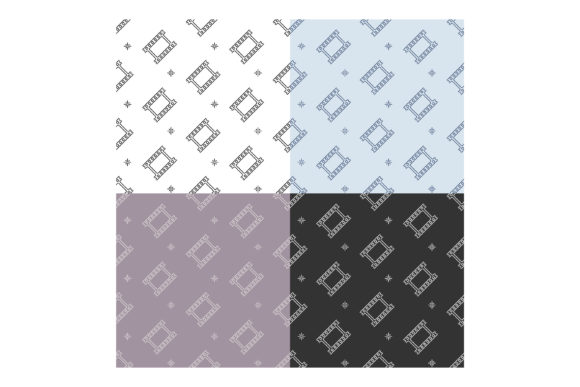
Exploring the Timeless Appeal of Seamless Patterns with Part of Old 35mm Photo Film
Why the Aesthetics of Analog Film Are Making a Comeback
In a digital world saturated with pixel-perfect graphics, a quiet rebellion is underway. Designers, textile artists, and branding professionals are increasingly turning to the imperfect, tactile charm of analog film. The allure of seamless patterns with part of old 35mm lies in their ability to evoke nostalgia while functioning as modern, repeatable design tools. Whether used in fabric printing, wallpaper, or digital backgrounds, these patterns capture the grain, sprocket holes, light leaks, and chemical stains that make each film strip unique. The result is a design language that feels both handcrafted and historically grounded.
From Filmstrips to Repeatable Artwork
At their core, these patterns are created by isolating elements from actual or simulated 35mm film—such as frame edges, perforations, dust marks, and exposed emulsion. These elements are then arranged algorithmically to form a set of seamless patterns with part of old 35mm photo film. The seamless nature means they tile infinitely without visible joins, making them ideal for large-scale applications like fabric rolls, book covers, or digital wallpapers. Designers can choose from a range of motifs: subtle film grain overlays, bold repeating sprocket hole sequences, or abstract compositions of light streaks and scratches.
Practical Advantages for Professionals and Hobbyists
- Versatility across media: These vector patterns scale without loss of resolution, so the same design can appear on a smartphone case or a curtain panel with identical crispness.
- Time efficiency: Instead of scanning and stitching individual film frames for every project, a pre-made seamless pattern provides a ready-to-use foundation.
- Creative flexibility: Because the patterns are vector-based, users can recolor, stretch, or layer them with other graphics without degrading quality.
- Emotional resonance: The inherent imperfections of old 35mm—dust specks, varying density, occasional light flares—add a human touch that digital-native designs often lack.
Core Characteristics of Old 35mm Seamless Patterns
Understanding the visual DNA of these patterns helps designers select the right one for their project. Common hallmarks include:
- Sprocket holes (perforations): The rectangular holes along the film edge are instantly recognizable. They can be arranged in rows, staggered, or offset to create rhythm.
- Frame borders and rebates: The dark, irregular lines between frames often appear as thin, uneven rectangles or trapezoids in the pattern.
- Emulsion texture: The slight graininess of developed film, sometimes with subtle color shifts from aging.
- Light leaks and chemical stains: Unplanned orange or cyan blobs that add organic unpredictability.
- Scratches and dust: Fine lines or tiny spots that, when repeated, form a texture reminiscent of handled film.
How These Elements Are Transformed into Seamless Vectors
Creating a seamless pattern with part of old 35mm typically begins with high-resolution scans of actual film strips or with digital emulations in software like Adobe Illustrator or Affinity Designer. The key is to select a tileable segment—usually a square or rectangle that, when repeated, hides its edges. Designers then manually adjust perforation spacing, grain density, and color overlays to ensure the repeat is flawless. Many vector sets include multiple colorways (e.g., sepia, black-and-white, faded color) and scale options, giving users control over the final look.
Fabric Printing and Fashion
Textile designers have embraced these patterns for creating retro-inspired apparel, accessories, and home linens. Imagine a summer dress printed with a faint grid of sprocket holes, or a scarf that features an all-over repeat of vintage film frames. Because the patterns are vector files, fabric printers can adjust the scale to fit garment panels without distortion. The set of seamless patterns with part of old 35mm photo film offers an instant shortcut to a vintage mood without the cost of sourcing actual vintage textiles.
Decoration and Interior Design
Wallpaper, upholstery, and even ceramic tiles benefit from the subtle repetition of film elements. A living room accent wall covered in a pattern of overlapping, translucent film strips creates a gallery-like atmosphere. The monochromatic versions work well for minimalist spaces, while brightly colored overlays suit eclectic interiors. Since these patterns are vectors, interior designers can request custom color palettes from the supplier to match existing decor.
Digital and Print Media
Graphic designers use film-inspired seamless patterns as background textures for websites, social media templates, and printed materials. A pattern of light grain and sprocket holes can add depth to a business card or a brochure without overwhelming the main content. For educators or researchers creating presentations on film history, these patterns provide an immediate visual context that words alone cannot convey.
Benefits for Creators and Entrepreneurs
Small business owners, especially those in creative fields like stationery or handmade products, can differentiate their brands with these patterns. A maker of artisan journals might use a subtle film grain pattern as the endpaper design. A photographer launching a print store could use a repeating sprocket hole motif as a watermark or border. The key advantage is that seamless patterns with part of old 35mm are both decorative and functional—they can be reused across product lines, building a cohesive visual identity.
Considerations When Selecting or Creating These Patterns
- Scale and proportion: A pattern that looks great on a phone screen may overwhelm a fabric when printed at full size. Always test at intended output dimensions.
- Color complexity: Film patterns often contain muted, faded colors that can appear dull if overused. Pair them with bold typography or vibrant accents for balance.
- License and usage rights: Many vector sets are royalty-free, but some require attribution or restrict commercial use. Check the license before mass-producing products.
- Seamless quality: Even professional sets can have visible repeats. Request a sample tile or test the pattern in your software before finalizing.
The Role of Vector Format in Preserving Film Texture
Vector graphics—composed of paths rather than pixels—are ideal for seamless patterns because they allow infinite scaling without pixelation. When a film grain pattern is created as a vector, each speck of dust or grain of emulsion is represented as a mathematical curve. This means the pattern can be enlarged to billboard size while retaining the same intricate detail. Moreover, vectors are editable: designers can delete specific elements, change colors, or adjust the density of grain without starting from scratch. For these reasons, the set of seamless patterns with part of old 35mm photo film is predominantly distributed in vector formats like AI, EPS, or SVG.
How to Work with Film Patterns in Your Projects
- Open the vector file in design software and ensure the pattern swatch is loaded.
- Apply the pattern to a shape or object—most programs let you scale and rotate the fill independently.
- Adjust opacity or blending mode: film grain often looks best when overlaid with Multiply or Overlay modes.
- Combine multiple patterns: layer a sprocket hole pattern with a dust texture for a more complex result.
- Test print a small section if using fabric or large-format printing to verify color and seam.
Emotional and Cultural Resonance of Film Patterns
Beyond their technical utility, these patterns tap into a collective memory. For older generations, the sight of sprocket holes and film grain recalls home movies and Kodachrome slides. For younger audiences, it represents a curated retro aesthetic popularized by social media filters and indie film photography. This dual appeal makes seamless patterns with part of old 35mm particularly effective in branding that aims to convey authenticity, craftsmanship, or a slow-made sensibility. A brand that uses these patterns subtly signals attention to detail and a reverence for analog processes.
Examples of Successful Implementation
- A coffee roastery uses a subtle film grain pattern on its packaging labels, evoking the warmth of a home darkroom.
- A music festival incorporates repeating film perforations into its poster series, bridging the gap between vintage gig posters and modern digital art.
- A textile studio releases a collection of silk scarves printed with abstract light leaks and sprocket holes, sold as limited-edition art pieces.
Comparing Film Seamless Patterns with Other Vintage Styles
While other vintage patterns—like damask, toile, or retro geometrics—offer historical references, film-based patterns occupy a unique niche. They reference a specific technology (celluloid film) and its material decay, rather than a broader era. This specificity gives them a raw, almost industrial feel that pairs well with minimalist or modern designs. They also lend themselves to layering: because they are semi-transparent and texture-heavy, they work as overlays on photographs or flat colors, whereas traditional patterns often demand full coverage.
Potential Drawbacks and How to Mitigate Them
- Overuse: The film aesthetic is popular, so using it without adaptation can look cliché. Customize colors or combine with hand-lettering to stay fresh.
- Complexity in small scales: Sprocket holes and grain can become muddy when reduced below a certain size. Use simpler variations for tiny applications.
- Screen vs. print color shift: Faded film colors may appear differently on a monitor than on dyed fabric. Request a printed proof before large runs.
Future Trends: Where Film Patterns Are Heading
As digital tools become more sophisticated, we are seeing a move toward generative film patterns—designs that change subtly across a repeat, mimicking the unpredictable variations of real film. Some vector sets now include multiple tile variations that can be mixed, creating larger seamless areas without obvious repetition. Additionally, the rise of sustainable fashion has increased interest in patterns that celebrate material history, including the repurposing of film imagery. The set of seamless patterns with part of old 35mm photo film is likely to expand into more organic, hand-drawn interpretations that blend the old film look with abstract art.
Final Thoughts for the Creative Professional
Whether you are a seasoned designer, a hobbyist exploring new textures, or a business owner seeking a distinctive brand element, these patterns offer a rich palette of visual storytelling. By understanding how they are constructed, where they shine, and what to watch out for, you can integrate seamless patterns with part of old 35mm into your work in a way that feels intentional rather than derivative. The imperfections of film—the dust, the scratches, the light leaks—become perfect tools for adding depth, memory, and humanity to your designs.