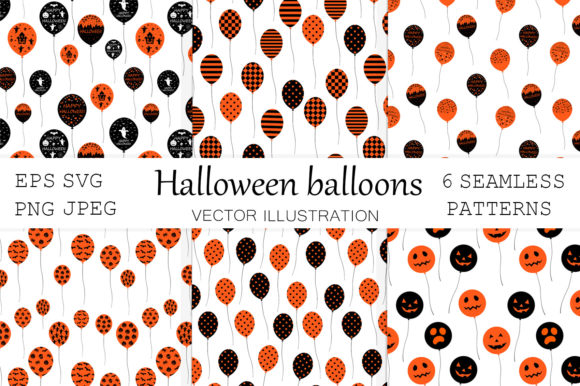
Halloween Balloons. Balloons Patterns: A Versatile Design Asset for Creative Workflows
Seamless patterns are a staple in modern digital design, offering efficiency and visual consistency across countless projects. Among seasonal themes, the combination of Halloween motifs with balloon patterns provides a unique opportunity to blend festive energy with elegant repetition. The collection Halloween Balloons. Balloons Patterns delivers exactly this — a set of six distinct seamless designs that bridge the gap between playful holiday graphics and refined, professional-grade assets. Whether you are a freelance designer, a small business owner creating seasonal packaging, or a digital scrapbooking enthusiast, understanding how to integrate these patterns into your workflow can save time and elevate your output.
This article explores what Halloween Balloons. Balloons Patterns offers, where it fits within a broader creative process, and how you can use it before, during, and after your projects. We will also examine file compatibility, practical implementation tips, and long-term asset management strategies to help you get the most out of this resource.
Understanding Seamless Patterns in Your Design Workflow
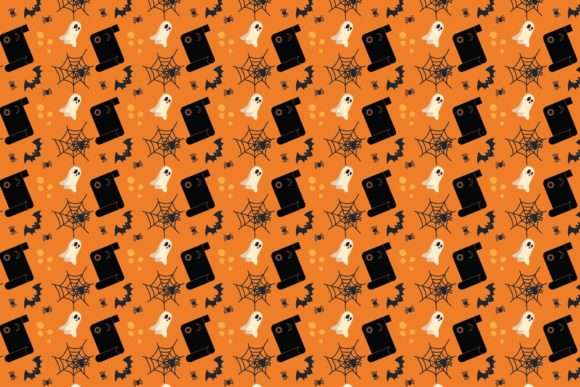
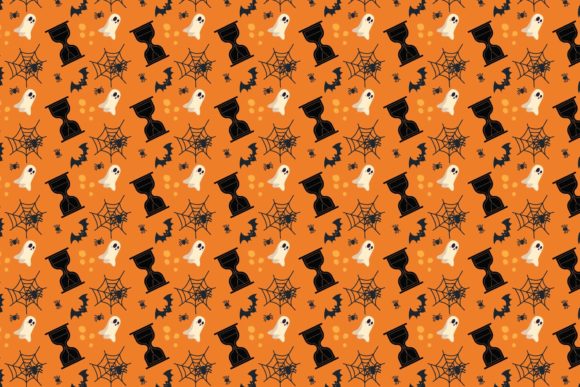
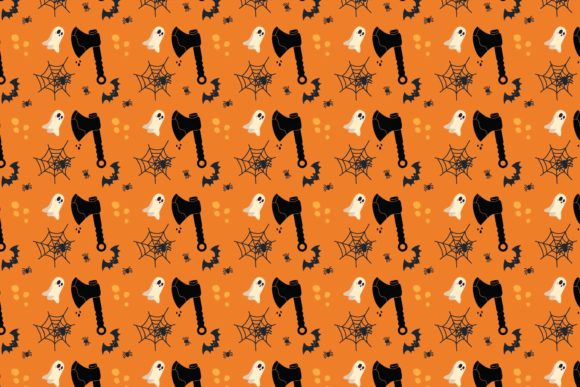
A seamless pattern is more than a decorative element — it is a repeatable tile that ensures uniformity across surfaces, backgrounds, and printed materials. In the context of Halloween Balloons. Balloons Patterns, each design features balloon motifs with varying degrees of subtlety, from bold Halloween colors to soft, romantic tones. This range makes the collection suitable for both overtly festive projects and those requiring a more understated seasonal nod.
In a typical design workflow, patterns are used at different stages. During the planning phase, you might browse these patterns to define a color palette or visual mood. During execution, the EPS or SVG files allow you to place the pattern into your layout, scale it, and combine it with other elements. After completion, having the pattern as a separate asset means you can reuse it in future projects without recreating the background each time. This separation of pattern from final design is a hallmark of efficient asset management.
Key File Formats and How They Interact with Your Tools
The collection includes six vector EPS files, six SVG files, six high-quality JPEG files, and six PNG files for each pattern. Understanding the role of each format helps you choose the right file for the right task without compatibility headaches.
- EPS (Encapsulated PostScript): Ideal for professional print workflows. These vector files can be opened in Adobe Illustrator (any version) and edited without resolution loss. Use EPS when you need to customize colors, resize drastically, or prepare files for offset printing.
- SVG (Scalable Vector Graphics): The go-to format for web and digital applications. SVG files are lightweight and maintain crispness on any screen. They work seamlessly in design software, web development environments, and even office applications like Microsoft Word or PowerPoint when inserting vector graphics.
- JPEG: A raster format best for quick previews, client proofs, or online listings. The JPEGs in this collection provide a high-resolution preview so you can see exactly how the pattern looks without launching a vector editor.
- PNG: Also raster, but with transparency support. PNG files are excellent for layering patterns over other backgrounds, creating mockups, or using directly in software that doesn’t handle vectors natively. The transparent background saves you time on manual masking.
Pro tip for workflow compatibility: If you work primarily in Adobe Photoshop, import the EPS file via the “Place Linked” or “Place Embedded” command to retain vector scalability. For Illustrator users, open the EPS directly and use the pattern swatch panel to apply the seamless design to any shape. SVG files can be dragged directly into most modern design tools, including web-based platforms like Canva or Figma.
Before the Project: Planning and Resource Gathering
Starting a new seasonal campaign or personal project often requires research and assembly of visual assets. By adding Halloween Balloons. Balloons Patterns to your resource library early, you can test different moods. For instance, a wedding invitation designer might choose the more romantic balloon patterns to create a “Halloween elegance” theme, while a party planner could select the spookier patterns for children’s event flyers. Having six distinct patterns allows you to compare options side by side without purchasing multiple separate packs.
During the Project: Execution and Iteration
Once you settle on a pattern, the integration steps depend on your software and end goal. If you are designing a greeting card, place the EPS pattern as a background layer in Illustrator. Adjust the tile size by scaling the pattern swatch — a 10% reduction can create a denser look, while scaling up produces larger, more prominent balloons. For digital scrapbooking, use the PNG files to layer pattern tiles over textured backgrounds. Because the pattern is seamless, you can extend it to any canvas size without visible seams.
For marketing professionals creating social media graphics or website headers, the SVG format is a time-saver. You can embed the pattern directly into HTML or use it in graphic design tools that support vector editing. The ability to recolor the SVG in code or design software means you can adapt the same pattern to different brand palettes while maintaining the core Halloween balloon motif.
After the Project: Finalization and File Archiving
When a project is complete, the patterns remain as reusable assets. Save the EPS or SVG files in a structured folder system by theme (e.g., “Patterns/Halloween/Balloons”). This organization speeds up future retrieval. Additionally, because the patterns are vector-based, they do not degrade when resized, so you can repurpose a pattern used for a business card onto a large banner without quality loss. The JPEG and PNG files are helpful for quick proofs — you can include them in client presentations without needing vector software.
Workflow Tips for Seamless Integration
- Preparation: Check Your Software Version
The collection explicitly states compatibility with any version of Adobe Photoshop and Illustrator. However, if you are using an older CS6 version, EPS files are more reliable than newer AI-native formats. For SVG, ensure your software supports current SVG 1.1 specifications — most modern tools do. If you are using open-source software like Inkscape or GIMP, SVG and PNG are the safest choices. - Usability: Organize Pattern Swatches
In Illustrator, open the EPS file, select the pattern tile, and drag it into the Swatches panel. Name each pattern descriptively (e.g., “Halloween_Balloon_Dark”) so you can apply it instantly in future documents. This reduces the need to open source files repeatedly. - Efficiency: Use Transparent PNGs for Quick Layering
When creating rapid mockups for client feedback, the PNG files with transparent backgrounds let you overlay the pattern onto photographs or colored backgrounds in seconds. No need to create clipping masks — just drag and drop. - Consistency: Standardize Color Adjustments
If you need to unify multiple patterns into a single project, use Illustrator’s “Edit Colors” tools (Recolor Artwork) to shift hue or saturation across all vector elements. This maintains the balloon pattern aesthetic while achieving brand or mood consistency. - Quality Control: Test Scaling at Different Resolutions
Even though the patterns are seamless, always test them at the final intended output size. In print, raster previews (JPEG/PNG) should be at 300 DPI; the vector files automatically adapt. For digital use, verify that the SVG renders correctly in web browsers — occasional SVG code might need minor adjustments if you manipulate the file programmatically.
Long-Term Use and Asset Management
Design assets are investments. To make Halloween Balloons. Balloons Patterns valuable beyond a single season, treat the files as part of a growing library. Because the collection includes both vector and raster formats, you can use the vector versions to generate new color variants or combine elements from different patterns. For example, extract individual balloon shapes from the EPS and build a custom pattern that mixes elements from the romantic and spooky designs.
If you run a small business that prints seasonal items (packaging, labels, planners), having these patterns in your toolkit means you can produce cohesive collections year after year. The vector files allow you to adjust the pattern scale to fit different product dimensions without needing a designer to recreate artwork. Store the files in a cloud-synced folder with clear naming conventions — “2024-Halloween-Balloons-Pattern-1.eps” — so that even after several years, you can locate and reuse the asset.
Getting the Most from Your Purchase
When you acquire Halloween Balloons. Balloons Patterns, you receive six complete seamless designs across four file types. This variety eliminates the need to convert formats manually, reducing the chance of errors. Whether you are a hobbyist designing a single scrapbook page or an entrepreneur preparing a full line of Halloween party supplies, the collection supports multiple workflows simultaneously. For collaborative teams, distributing SVG files to web developers and EPS files to print producers keeps everyone on the same page without format conflicts.
Take a few minutes to preview each pattern in its JPEG version before integrating it into a project. Note the dominant colors, the density of balloons, and the overall mood. Then select the corresponding vector file for the final work. This simple step saves you from opening and closing large EPS files just to check appearance.
Ultimately, Halloween Balloons. Balloons Patterns is not just a set of images — it is a flexible resource that adapts to your planning, execution, and archiving habits. By understanding how each file format interacts with your tools and where each fits in your process, you can use these patterns to create romantic, subtle, or bold designs with efficiency and consistency. Thank you for visiting the store — this collection is built to support real creative work, from concept to finished product.