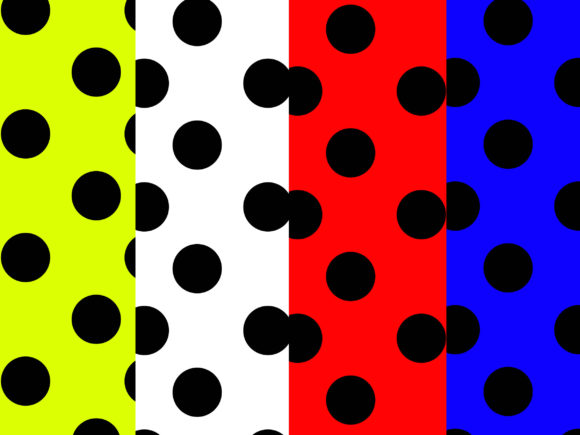
4x Dots Patterns Background Texture: A Versatile Asset for Creative Workflows
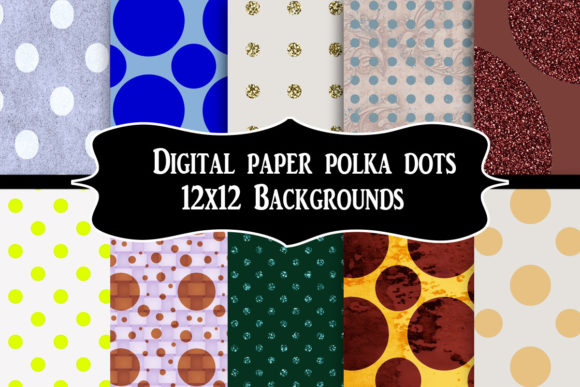
Every designer, stationer, or small business owner knows the value of a reliable background set. When you need a pattern that works across print and digital without losing detail, the 4x Dots Patterns Background Texture collection delivers exactly that. This set includes four high-resolution backgrounds—each measuring 8000 x 8000 pixels at 300 dpi in JPG format—ready to drop into invitations, merchandise mockups, website headers, and handmade crafts. The colorful dot motifs are neither trendy nor dated; they stay useful across seasons, themes, and client preferences.
Understanding the 4x Dots Patterns Background Texture Set
The product contains four distinct dot-patterned backgrounds, each with its own color palette and tone. Because the resolution is generous, you can crop, scale, and rotate these files without visible pixelation. The 300 dpi setting ensures that any printed piece—whether a small bottle cap or a large poster—will retain crisp edges and smooth gradients. For digital use, the JPG format keeps file sizes manageable while preserving enough quality for on-screen displays, social media graphics, and web backgrounds.
What sets this collection apart is its versatility. The patterns are not rigidly themed; they work equally well for a playful kids’ party invitation and a modern business card. The dots vary in density and arrangement, giving you options for subtle texture or bold statement. This makes the set a practical addition to any creative library, especially for freelancers and small teams who need to produce multiple projects with a consistent visual thread.
Integrating the Texture Set into Your Creative Process
A background texture is rarely a standalone element. Its true value emerges when you weave it into the workflow of a specific project—from initial concept to final delivery. Use the 4x Dots Patterns before, during, and after your main design work to save time, maintain consistency, and explore variations.
Before the Project: Planning and Mood Boards
At the planning stage, quickly apply a dot pattern to a blank canvas to test color schemes. Because the set includes four different palettes, you can drop each one into a mood board and see which harmonizes with your typography, illustrations, or product photos. This is especially useful for small business owners designing branded materials: lay the pattern behind your logo mockup before committing to a full print run. It also helps educators preparing handouts or digital slides—place the dots behind bullet points to gauge readability and contrast.
During the Project: Direct Application and Layering
When you move into execution, the textures function as base layers, overlays, or masked backgrounds. Open the JPG file in your design software (Photoshop, Illustrator, Canva, Affinity, or GIMP) and place it behind text, icons, or product images. Because the patterns are high-res, you can resize them to fit a 48-inch banner or a 2-inch sticker without degrading. For T-shirt designs, use the dot pattern as a fill with a clipping mask; for mugs, wrap it around a cylinder mockup. The same file works for cell phone covers—just crop to the device model’s template.
Website designers can use these backgrounds as hero section textures or repeating tile images. Save a section of the 8000-pixel file as a seamless tile (many dot patterns are naturally tileable after minor editing). This approach keeps the site fast while maintaining a cohesive look. Bloggers and publishers often appreciate this because they can create a signature background style for their blog posts or newsletter headers.
After the Project: Final Adjustments and Consistency
Once the layout is done, the texture can help unify disparate elements. If your invitation has a photograph, an illustration, and text, a subtle dot overlay (with blending mode set to Multiply or Soft Light) can tie them together. For paper crafts like junk journals or scrapbooking pages, print the pattern on textured paper and use it as a foundation for layering ephemera. Party props such as banners or table signs benefit from the same treatment—choose one pattern from the set and repeat it across all items for a coordinated event.
Practical Implementation Tips for Consistent Results
To get the most out of the 4x Dots Patterns, a few workflow habits will save you frustration and rework.
- Manage resolution from the start. Always import the native 8000-pixel file. Resize down only at the final output stage. If you need a smaller version for rough drafts, copy the file and reduce it temporarily, but keep the original untouched.
- Set your document’s color profile. Most of these textures are sRGB, which works for both screen and print. However, if you are preparing a file for a commercial printer (e.g., offset or digital), convert to CMYK and check for color shifts. Test print a small sample before committing to a large order.
- Experiment with blending modes. Place the pattern on a separate layer above your main design. Try Overlay, Multiply, Screen, or Soft Light. A light dot pattern over a photograph can add a subtle texture without overwhelming the subject.
- Organize your asset library. Rename each pattern with a recognizable tag (e.g., “dots_yellow_highdensity” or “dots_blue_sparse”). Store the JPG files in a folder that you can access from design software and cloud storage. This is especially useful for freelancers and entrepreneurs who reuse assets across multiple client projects.
- Use for both print and digital mockups. When showing a client a preview of a bottle cap or magnet, place the pattern behind the product shape. This gives a realistic sense of how the design will look once printed.
Long-Term Use and Asset Management
A single purchase of the 4x Dots Patterns Background Texture set can serve you for years if you treat it as a reusable component. Archive the files in a dedicated “Texture Library” folder with subfolders for patterns, colors, and themes. When you start a new project—whether it’s a digital album, a wedding invitation, or a line of magnets—open the folder and audition the four options.
Because the images are high-res and JPG compressed, they load quickly and work well with templates from print-on-demand platforms like Printful, Redbubble, or Zazzle. Simply upload the texture as a background layer for your product design. Consistency is easier to maintain when you have a small, curated set of reliable backgrounds rather than dozens of random files.
For paper crafters who create junk journals or scrapbooking kits, print these patterns on sticker paper or cardstock at home. Cut out sections to create pockets, tags, and embellishments. The 300 dpi resolution guarantees that text and fine details remain sharp even at small sizes.
The Texture Set as Part of a Broader Tool Ecosystem
No background texture works in isolation. The 4x Dots Patterns integrate smoothly with popular design tools and workflows.
- Adobe Photoshop & Illustrator: Use as a fill layer, pattern swatch, or placed image. In Illustrator, you can embed the JPG and then scale or mask it non-destructively.
- Canva: Upload the file to your brand kit or use it as a background in any design. Because Canva handles 8000-pixel images well, you can crop directly within the editor.
- Affinity & GIMP: Compatible with all layer-based editors. Follow the same layering and blending techniques.
- InDesign: Place the texture in a frame for multipage documents like catalogs or magazines. Link the file to keep the document size small.
- Procreate & other tablet apps: Import the JPG as a canvas layer for digital art or journaling. The high resolution gives you room to zoom and add detail.
- Print-on-demand platforms: Many marketplaces accept JPG uploads. Stick to 300 dpi and sRGB for the most consistent output.
When you combine this texture set with other resources—like vector icons, typography packs, and photo libraries—you can produce a cohesive brand or event package without starting from scratch each time.
In summary, the 4x Dots Patterns Background Texture collection is more than a simple background pack. It is a practical tool that fits naturally into the planning, creation, and finishing stages of any design project. The generous dimensions and resolution mean you can use it across countless media, from digital albums to bottle caps to core website backgrounds. By integrating these patterns thoughtfully into your workflow, you save time, maintain visual consistency, and expand your creative options without unnecessary complexity.