Seamless Musical Patterns for Creative Design
Imagine a fabric that dances with disco speakers, a wallpaper that pulses with retro rhythm, or a phone case that turns a musical motif into wearable art. Seamless patterns featuring musical elements like speakers, disco equipment, and ornamental sound waves offer a bridge between audio nostalgia and visual design. Whether you’re a fashion designer looking to print a custom textile, a graphic artist building a branded digital backdrop, or a small business owner crafting packaging that pops, these repeat patterns deliver versatility without losing consistency. The key lies in understanding how to select, adapt, and apply them so they feel intentional—not just decorative.
What Makes a Musical Seamless Pattern Unique?
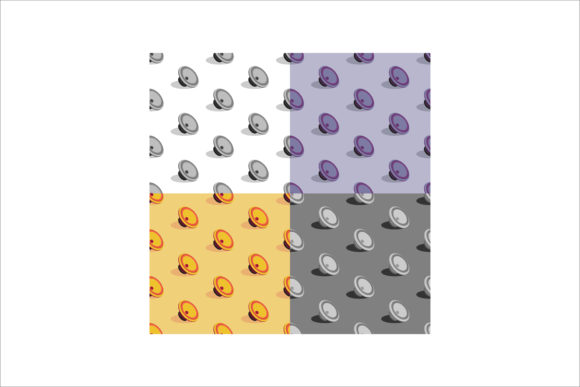
A set of seamless patterns with musical sp—short for “speaker patterns” or “sound pieces”—goes beyond simple note repeats. These designs often incorporate realistic or stylized depictions of disco equipment: vintage boomboxes, turntables, microphone grilles, and shimmering disco balls. They become ornaments that work as standalone prints or layered textures. Because they are vector-based, each element scales without losing sharpness, making them ideal for everything from fabric yardage to large-format wall murals. The seamless nature means the pattern flows from edge to edge without visible breaks, giving the finished product a polished, professional look. For creators, this eliminates the tedious work of manually tiling motifs and lets you focus on color adjustments, composition, and overall mood.
Creative Applications Across Platforms and Audiences
The beauty of these patterns is their adaptability. A single set can serve vastly different purposes depending on how you modify it. Here are a few ways different users can put them to work:
- Fashion and textile designers – Use the patterns for custom dress fabrics, shirt prints, or even accessories like scarves and tote bags. A muted gold and black palette gives a sophisticated nightclub feel, while bright neon colors channel an ’80s arcade energy.
- Graphic and surface designers – Create digital background textures for websites, social media templates, or printed flyers. The repeat logic ensures the pattern works across mobile and desktop viewports without awkward cropping.
- Marketers and event planners – Develop cohesive branding for disco-themed parties, music festivals, or retro events. Apply the pattern to banners, tickets, stage backdrops, and merchandise.
- Hobbyists and DIY creators – Print on fabric for home décor projects like throw pillows, tablecloths, or curtains. The vector files are easy to edit in design software, so you can recolor the pattern to match your room’s color scheme.
- Publishers and bloggers – Use a subtle version of the pattern as a background for editorial layouts or as a repeating header image. It adds visual interest without distracting from text.
Adapting Patterns for Different Goals and Audiences
One of the most valuable skills you can develop is learning to tweak a seamless pattern to suit a specific context. Start by considering the mood you want to evoke. A pattern filled with detailed musical speakers and disco equipment naturally leans toward excitement, nostalgia, and party energy. That works perfectly for a younger audience (think Gen Z and millennials who love retro revival) but might feel too loud for a more professional or minimalist project. To adjust, reduce the scale of the motifs, increase the spacing, or lower the contrast between foreground and background colors. For a fabric intended for children’s clothing, you could simplify the shapes into playful, cartoon-like speakers and keep the overall pattern light and airy. For a luxury product, use metallic accents and a darker, more restrained color range—gold on deep navy, for example—so the musical elements read as sophisticated ornament rather than novelty print.
Another consideration is the viewing distance and physical scale. A pattern that looks good on a phone screen may feel overwhelming on a sofa cover. Test the pattern at actual print size and adjust the repeat dimensions. Vector sets usually allow you to scale elements freely, but always preview the final output on the intended medium.
Realistic Project Ideas and Examples
Let’s move from general advice to concrete projects you can start with a set of seamless patterns with musical speakers and disco decoration.
- Custom phone cases – Use a high-contrast version of the pattern (e.g., white speakers on a bright magenta background) and mock it up on a phone case template. Sell through print-on-demand platforms. The seamless repeat ensures the design wraps around the case edges cleanly.
- Wrapping paper – A medium-density pattern works beautifully for gift wrap. Choose a unisex colorway like teal and orange to appeal to a broad range of recipients. You can also create a matching tag or sticker set using a smaller portion of the pattern.
- Social media highlight covers – Extract one or two musical icons from the pattern (like a single disco ball or a vintage speaker) and place them on a solid-colored circle. Use these as Instagram Story or highlight covers for a music-related business or personal brand.
- Fabric tote bags – Send the vector file to a fabric printer and have a few yards custom printed. Sew simple tote bags for a small brand launch. The pattern becomes the brand’s signature graphic.
- Event backdrop and photo booth props – Resize the seamless pattern to fit a large banner (e.g., 8 ft by 10 ft). For a disco night, combine the pattern with metallic fringe and a few real disco balls hanging in front. The printed backdrop adds depth without competing with the physical decorations.
When working on these projects, consistency is key. Keep the color palette limited to two or three dominant colors plus an accent. This prevents the pattern from feeling chaotic and makes it easier to pair with solid elements like text or logos. If you’re using the pattern as a background for text, choose a version with lower detail density so the message remains readable.
Practical Guidance for Working with Seamless Patterns
To get the most out of your vector musical patterns, follow a few simple organizing principles. First, always keep the original file unaltered and work from copies. This allows you to return to the base pattern when you need a different variation. Second, if you plan to print on fabric, run a color test on the actual material because digital screens and printer outputs can differ considerably. Adjust saturation and brightness accordingly. Third, consider the repeat direction. Most seamless patterns tile in both horizontal and vertical directions, but sometimes the arrangement works better on a single axis (e.g., a vertical stripe effect). You can rotate or flip elements within the pattern to create a mirror repeat for a more balanced look—just ensure the edges still align.
For designers who want to make the pattern feel original, don’t be afraid to layer in a second pattern or texture. A subtle noise overlay can give the print a distressed, vintage feel. A transparent geometric grid underneath can add modern structure. Because the musical motifs are already ornamental, they integrate well with abstract shapes and lines. Experiment with blending modes in your design software to see how the pattern interacts with flat color blocks or gradients.
Balancing Inspiration with Practical Execution
While it’s tempting to dive straight into a full-scale print project, start small. Test the pattern on a single pillow cover or a digital wallpaper for your phone. Observe how it behaves in different lighting, on different devices, or from different distances. This low-stakes testing will reveal whether the pattern needs scaling, recoloring, or simplifying. Another practical tip: collect reference images of disco culture and speaker designs. Even though you’re using a ready-made set, understanding the real-world inspiration behind the motifs will help you make informed editing decisions—like which speaker grille shapes feel more authentic, or when a disco ball should be detailed versus abstract.
Remember that a seamless pattern is ultimately a tool for telling a visual story. When you apply it, ask yourself: does this pattern support the message I want to communicate? If the answer is yes, you’ve already made the best creative choice. The rest is just fine-tuning the details.