How to Use Patterns with Strong Hand of Athlete for Sportswear and Branding
If you’re looking to create sports‑themed designs, you’ve probably come across patterns with strong hand of athlete and the set of seamless patterns with strong hand of athlete holds dumbbell. These vector‑based design elements are popular for everything from fitness apparel to gym branding and textile prints. But using them effectively isn’t always straightforward. Many designers, small business owners, and even hobbyists run into avoidable problems that hurt the final result. Let’s look at the most common pitfalls and how to sidestep them.
What Makes These Patterns Appealing
At their core, these patterns combine a powerful visual symbol – a strong hand gripping a dumbbell – with repeating seamless geometry. They’re meant to convey strength, discipline, and an active lifestyle. Because they come as a set, you get multiple variations that can be used across different products: t‑shirts, leggings, water bottles, phone cases, or digital backgrounds. The vector format ensures they scale cleanly from a small icon to a large banner. That versatility is why fitness brands, apparel startups, and content creators often gravitate toward them.
However, the very qualities that make these patterns attractive also lead to misuse. Below are the mistakes I see most often, along with straightforward ways to avoid them.
Mistake 1: Choosing Non‑Seamless or Poorly Repeating Patterns
A seamless pattern is one that repeats infinitely without visible seams, edges, or mismatches. When you’re buying “seamless patterns,” assume nothing. Some sets labeled “seamless” are actually tiled images that show obvious lines when applied over larger areas. This kills the professional look, especially on fabric or wallpaper.
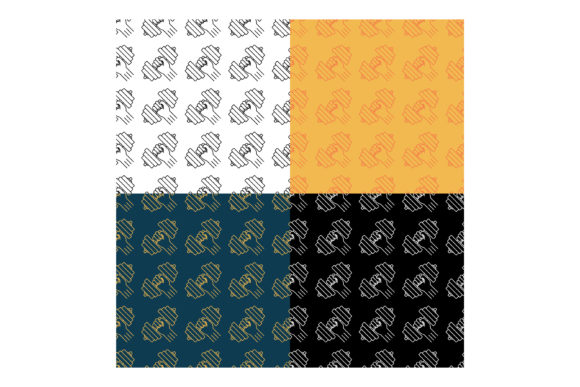
What to check: Look for preview images that show the pattern repeated at least 2×2. If the seller only provides a single tile view, ask for a repeat example. Better yet, download a trial or check the file metadata – vector patterns (AI, EPS, SVG) are generally easier to make truly seamless than raster images. If you’re creating your own repeat, use pattern‑making tools in Illustrator or Affinity Designer and test the repeat at actual size.
Mistake 2: Overlooking Scalability for Different Products
The hand‑and‑dumbbell motif is bold. But what looks good on a 12‑inch laptop skin might feel overwhelming on a small gym towel or too tiny on a hoodie backprint. Many buyers grab a pattern without considering how the elements scale relative to their product.
Better approach: Before purchasing, review the pattern composition. Does it have a central motif that dominates, or are there smaller repeating sub‑elements? A set of seamless patterns with strong hand of athlete holds dumbbell usually offers both dense and sparse arrangements. Dense patterns work better on larger surfaces (wall decals, leggings), while sparse or scaled‑down versions suit smaller items (headbands, patches). If the set you’re eyeing doesn’t include multiple scales, request customization or plan to resize the vector file proportionally – but be mindful that very large scale changes may break the visual balance.
Mistake 3: Misunderstanding Licensing for Commercial Use
One of the most costly errors is using a pattern without the right license. Many pattern sets are sold for personal use only, or have restrictions on the number of units you can produce, or require attribution. When you’re building a brand or selling products, you need a commercial license that covers your specific use case.
What to do: Read the license before you buy. Look for terms like “commercial use,” “unlimited products,” or “merchandise rights.” If the license says “no resale of digital files” that’s fine – you’re using the pattern on physical goods. But if it limits print runs to 100 pieces and you plan to sell 500, you’ll need an extended license. Keep a copy of the license document for your records. This is especially important for entrepreneurs and small businesses who might inadvertently infringe.
Mistake 4: Overcomplicating the Design with Too Many Elements
The strong hand of athlete is already a strong statement. Adding extra text, badges, or competing motifs can clutter the pattern. I’ve seen designs where the dumbbell hand gets lost behind a busy background or layered with too many other symbols. The result looks messy and amateurish.
Simpler is better: Use the pattern as a primary background or accent. Let the hand motif breathe. If you’re creating a t‑shirt, consider a solid front print with the pattern used on sleeves or side panels. For digital designs (social media banners, website headers), a subtle overlay of the pattern can convey energy without shouting. A good rule: the pattern should enhance the product, not dominate it.
Mistake 5: Ignoring Color Palette Matching with Your Brand
Pattern sets often come in a few preset colorways – maybe black/white, metallics, or neon. That might not align with your brand’s identity. If you need a specific shade of orange or a muted pastel background, you’ll either have to recolor the pattern yourself or find a set that allows easy color customization.
Solution: Choose patterns that are delivered in vector format with separate layers or grouped elements that can be recolored. AI and EPS files usually allow you to change stroke and fill colors individually. If you’re not comfortable editing vectors, look for sets that offer multiple color variants – at least light, dark, and colorful versions. Always test the pattern on your actual product mockup before finalizing. Lighting, fabric texture, or screen calibration can shift perceived colors.
Mistake 6: Neglecting File Format Compatibility
You’ve found the perfect set of seamless patterns with strong hand of athlete holds dumbbell, but it’s only available in PNG and you need a vector file for large‑format printing. Or it’s an EPS but your software only supports SVG. These mismatches lead to frustration and extra work.
Check before downloading: Ensure the set includes formats you can use. Ideally, get a vector format (AI, EPS, SVG) plus high‑resolution PNG (at least 300 dpi) for quick mockups. For fabric printing, some services require PDF or TIFF. Know your output requirements upfront. If you’re a creator who uses Canva, make sure the pattern is compatible (SVG upload or transparent PNG). For professional printing, vector is almost always preferred for seamless scalability.
Mistake 7: Forgetting About Alignment and Registration in Seamless Patterns
Even a perfectly seamless pattern can break if you don’t align it correctly when applying to a product. For example, if you place the pattern on a yoga mat but the hand motifs are cut off awkwardly at the edges, or the repeat doesn’t match across the seam of a garment, the design looks unprofessional.
How to avoid: Use the pattern tile as a full repeat rather than a single copy stretched to fill. Most vector programs have a “pattern fill” or “tile” tool. Apply that fill to a shape the size of your product, then adjust the scale and position within the fill options. Always check the pattern at the actual seams of your product – for clothing, produce a mockup with the pattern wrapped around a 3D avatar. For wallpapers or wraparound decals, test the repeat across the intended width.
Practical Advice Before You Buy or Download
Before you hit “add to cart” on that pattern set, take a few minutes to run through this checklist:
- Resolution & format: Is it vector or at least 300 dpi PNG? Does it include the file types you need?
- Seamless test: Can you see a repeat sample? Is the pattern truly seamless?
- License: Does it cover your intended commercial use? Are there unit limits?
- Color options: Are there pre‑made colorways, or can you recolor easily?
- Scaling flexibility: Does the set contain multiple sizes or scales of the motif?
- Compatibility: Will the patterns work in your software (Adobe, Affinity, Canva, Procreate, etc.)?
If the product listing is vague, message the seller. Reputable creators are happy to answer format and licensing questions.
Making the Pattern Work for You
When chosen and applied correctly, patterns with strong hand of athlete bring energy and focus to any sports‑related design. They help convey a message of dedication and strength without needing extra text. By avoiding the mistakes above – poor repeats, scaling issues, wrong licenses, color mismatches, file incompatibilities, and alignment errors – you ensure your final product looks clean, professional, and on‑brand.
Start with a quality set of seamless patterns with strong hand of athlete holds dumbbell. Test your application thoroughly. And remember that sometimes less is more: let the pattern complement your product, not overwhelm it. Whether you’re creating gear for a gym startup, designing a limited‑edition collection, or building content for a fitness blog, taking these extra steps will save you time, money, and rework.
Good design is about making intentional choices. Choose your patterns wisely, and your audience will feel the strength you’ve put into every detail.